If you’ve ever stood on a deck and felt the view was being chopped up by thick posts and rows of balusters, you already understand why railing cable systems have become so popular. Thin stainless steel cables run horizontally between sturdy posts, so the railing protects you without blocking the skyline, the backyard, or the water.
Here in New York, where outdoor space is precious and every foot of a deck, stoop, or balcony counts, that open look makes a real difference. Below is a plain-English rundown of the main types of railing cable systems, where each works best, and what to check before you commit to one.
Why Railing Cable Systems Are Worth a Look
Before getting into the options, here’s what draws most people to them:
- Unobstructed views. Cable is thin, so your eye passes right through it.
- Low maintenance. Stainless steel doesn’t need painting or staining the way wood does.
- Modern, clean lines. Cable looks sharp with metal, composite, or wood frames.
- Durability. Good stainless cable stands up to sun, snow, rain, and road salt far better than many traditional materials.
They aren’t perfect for every home, and the details of installation matter a lot. More on that below.
Top Railing Cable Systems by Type
1. Stainless Steel Cable with Metal Posts (The Classic)
This is the setup most people picture: horizontal stainless cables threaded through steel or aluminum posts. It’s strong, long-lasting, and looks great on decks, porches, and balconies.
Best for: Decks and balconies where you want a sleek, modern appearance and long-term durability.
Worth knowing: The posts carry the load. The cables are held under real tension, so posts, especially end and corner posts, must be properly built and anchored.
2. Cable Railing with Wood Posts
Wood posts with stainless cable give a warmer, more traditional look while keeping the view open. It’s a popular choice for homeowners who like the feel of a wood deck.
Best for: Residential decks and porches where you want the warmth of wood.
Worth knowing: Wood can shift slightly with moisture and temperature, which can affect cable tension over time. Plan for occasional re-tensioning. Heavy cable tension also calls for posts that are reinforced or sized correctly.
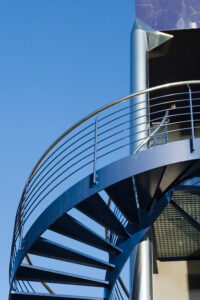
3. Cable Railing for Stairs
Stairs are where cable railings get tricky and where quality fabrication shows. Cables must follow the angle of the staircase, and the spacing has to stay consistent along the slope.
Best for: Interior and exterior stairs where you want a light, open look.
Worth knowing: Angled runs need correct fittings and more careful layout than a flat deck section. This is a spot where custom metalwork usually beats off-the-shelf parts.
4. Cable Railing for Balconies and Rooftops
On balconies and rooftop terraces, views are the whole point, and wind exposure is higher. Cable keeps sightlines open and doesn’t catch wind the way solid panels do.
Best for: Apartment balconies, rooftop decks, and elevated patios.
Worth knowing: Elevated installations come with stricter safety and code expectations. Have the structure that supports the railing checked, not just the railing itself.
5. Custom Fabricated Cable Railing
When your layout has odd angles, curves, or unusual dimensions, a custom-fabricated system built by an ironworks shop is often the best path. Posts, frames, and mounting are made to fit your space instead of the other way around.
Best for: Unusual layouts, historic or older homes, and projects where fit and finish matter most.
Worth knowing: Custom costs more upfront, but you get a precise fit, and it’s built to last.
What to Look for Before You Buy
A few quick checks will save you headaches later.
1. Cable material. Look for stainless steel. Type 316 is the better choice for coastal areas or anywhere exposed to heavy salt, such as Long Island, Staten Island, and shoreline properties. Type 304 can suit inland spots, but it may show surface staining sooner in harsh conditions.
2. Cable spacing. Building codes generally require that a 4-inch sphere cannot pass through any opening in a guard. Because cables can flex, spacing is usually kept to about 3 inches or less between runs so the gap stays safe under load. Ask your installer how they handle this.
3. Railing height. Guard height requirements depend on the type of building and where you live. Residential guards are commonly 36 inches and commercial or multi-family guards 42 inches, but New York State and New York City each have their own rules, so confirm with your local building department.
4. Post strength and anchoring. Cable systems put a lot of tension on posts. Sturdy, correctly anchored posts matter more than almost anything else in the system.
5. Fittings and tensioners. Quality hardware keeps cables tight and makes future adjustments easy. Cheap fittings are a common weak point.
6. Permits and code. Many projects need a permit, especially at height. Check before you start, and keep the paperwork if you ever sell.
Maintenance: Keeping Cable Railings Looking Sharp
One of the best parts of cable railing is how little upkeep it needs, but it isn’t zero:
- Wipe down the cable and fittings a couple of times a year with mild soap and water.
- Rinse off road salt and grime after winter, especially near streets and driveways.
- Check tension once or twice a year. Cables can loosen slightly as materials settle and temperatures swing.
- Inspect fittings for any wear, rust staining, or looseness.
A few minutes of attention each season keeps the railing both safe and good-looking.
DIY or Hire a Pro?
Cable railing kits are sold for DIY installation, and a handy homeowner can sometimes manage a simple, flat deck run. But I’d lean toward a professional in these cases:
- Stairs or angled sections
- Balconies, rooftops, or anything elevated
- Projects that need permits or inspections
- Custom layouts or older structures with uncertain framing
Railings are safety equipment. A wobbly post or a sagging cable isn’t just ugly; it can be dangerous.
Final Thoughts
Railing cable systems give you strength, safety, and an open view all at once, whether you’re updating a backyard deck, a staircase, or a city balcony. The best choice comes down to your structure, your style, your exposure to the elements, and local code, and getting the posts, spacing, and hardware right is what separates a railing that lasts from one that gives you trouble.
If you’re planning a project in New York and want help with custom railing and metalwork, take a look at PMF II Iron Works. Share your measurements and goals, and ask about cable railing options for your deck, stairs, or balcony.