If you own a home on Long Island, you already know what our weather can do. One week it’s a nor’easter dumping rain sideways, the next it’s a foot of snow piling up against the foundation. And the spot that usually takes the hit first? Those little window wells around your basement.
I’ve seen plenty of homeowners ignore their window wells until the day they walk downstairs to a soaked carpet or find a family of leaves, frogs, and who-knows-what living in the well. The good news is that the fix is simple: a well-chosen basement window cover. The trick is picking the right one for your home.
In this post, I’ll walk you through what to think about before you buy, so you get basement window covers that actually protect your home and last for years.
Why Basement Window Covers Matter
Before we get into choosing one, here’s a quick look at what a good cover does for you:
- Keeps water out. Rain and melting snow collect in uncovered wells and can seep through the window frame or foundation.
- Blocks debris and pests. Leaves, trash, mice, and small animals love an open window well.
- Improves safety. An open well is a fall hazard for kids, pets, and guests, especially at night.
- Adds security. A sturdy, well-anchored cover makes a basement window a much harder entry point for intruders.
- Helps with energy efficiency. Covering the well cuts down on cold drafts hitting basement windows in winter.
In a coastal area like Freeport, where heavy storms and high water tables are part of life, these benefits aren’t just nice to have.
1. Start With Your Main Goal
Every home is different, so ask yourself what problem you’re really trying to solve:
- Flooding and water? Look for a solid, sloped cover that sheds water away from the well.
- Safety and security? A heavy-duty steel grate or a reinforced cover bolted to the foundation is the way to go.
- Natural light? A clear polycarbonate cover lets sunlight into the basement while keeping the weather out.
- All of the above? Many homeowners combine a steel grate for strength with a clear panel on top for weather protection.
Knowing your priority narrows your options fast.
2. Pick the Right Material
Material is the biggest factor in how long your cover lasts and how well it performs.
Plastic or acrylic. These are the cheap covers you’ll find at big-box stores. They’re light and easy to install, but they can crack in the cold, turn yellow in the sun, and often can’t support much weight.
Polycarbonate. A big step up from basic plastic. It’s clear, impact-resistant, and handles temperature swings much better. It’s a good choice if you want light and weather protection.
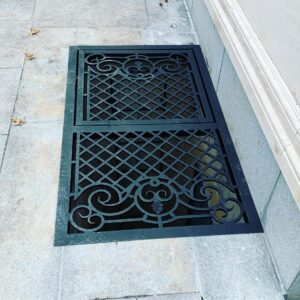
Steel and iron. If strength, safety, and longevity are top of your list, metal is hard to beat. A custom steel or iron grate can hold the weight of a person, stand up to heavy snow loads, and resist break-ins. With a proper powder coat or galvanized finish, it also holds up against rust, which matters a lot near the water here on the South Shore.
Combination covers. A steel frame with a polycarbonate top gives you the best of both worlds: the strength of metal with the light and water protection of a clear panel.
3. Measure Carefully (Or Have a Pro Do It)
A cover that doesn’t fit is a cover that doesn’t work. Gaps let in water and pests, and a loose cover can shift or blow off in a storm.
Here’s how to measure your window well:
- Width: Measure across the widest point of the well, from outside edge to outside edge.
- Projection: Measure from the foundation wall out to the front edge of the well.
- Shape: Note whether your well is semicircular, rectangular, or a custom shape.
- Lip or edge: Check whether the well has a flange for the cover to sit on.
Many older Long Island homes have odd-sized or poured-concrete wells that standard covers just won’t fit. In those cases, a custom-made cover is usually the only way to get a tight, secure fit.
4. Think About Weight and Load
Ask yourself: could someone step on this cover? Could snow pile up on it?
If your basement windows sit near a walkway, driveway, patio, or play area, you’ll want a cover that’s rated to hold a person’s weight. The same goes for any well where snow drifts build up in winter. Flimsy plastic covers can collapse under a heavy, wet snowfall, which defeats the whole purpose. Steel grates and reinforced covers are the safer bet for high-traffic spots.
5. Don’t Forget Egress and Building Codes
This is the one people often miss. If your basement window is an egress window (meaning it’s meant to be an emergency exit, often required for a basement bedroom), the cover must be easy to open from the inside without keys, tools, or special knowledge.
A bolted-down cover on an egress window can be a serious safety risk and may not meet local code. For egress wells, look for hinged or lift-off covers, and check with your local building department in Nassau County or your town if you’re unsure about the rules.
6. Consider Looks and Curb Appeal
Basement window covers are part of your home’s exterior, so they should look the part. A cheap plastic bubble can stick out like a sore thumb, while a well-made iron or steel grate can match your railings, gates, or fencing and actually add to your curb appeal.
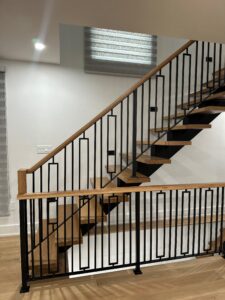
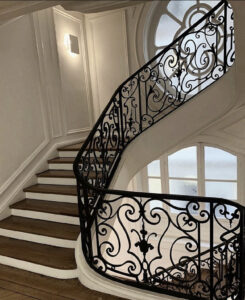
If you already have custom ironwork around your home, matching the finish and style of your window well covers ties the whole look together.
7. Off-the-Shelf vs. Custom Covers
| Off-the-Shelf | Custom-Made | |
|---|---|---|
| Cost | Lower upfront | Higher upfront, better long-term value |
| Fit | Standard sizes only | Built to your exact well |
| Strength | Often limited | Can be built to hold heavy loads |
| Durability | May crack, warp, or fade | Long-lasting with the right finish |
| Style | Basic | Can match your home’s ironwork |
For a standard-size well where you just want to keep leaves out, a store-bought cover may do the job. But for odd shapes, high-traffic areas, security concerns, or storm-heavy locations, custom basement window covers are worth the investment.
8. Plan for Installation and Maintenance
Even the best cover won’t help if it’s installed poorly. A proper installation means the cover is:
- Anchored securely to the foundation or well
- Sloped so water runs away from the house
- Sealed or fitted tightly to keep out pests and debris
- Easy to open if the window is used for egress
After that, maintenance is simple. Clear off leaves and snow, check for rust or cracks once or twice a year, and make sure the drain at the bottom of the well isn’t clogged.
Quick Checklist Before You Buy
- I know my main goal (water, safety, light, or all three)
- I’ve picked a material that fits that goal
- I’ve measured width, projection, and shape
- The cover can handle foot traffic and snow if needed
- Egress windows have a cover that opens easily from inside
- The style fits my home’s exterior
- I have a plan for proper installation
Getting Custom Basement Window Covers on Long Island
If you’re in Freeport or anywhere on Long Island and want something stronger and better-fitting than a store-bought plastic bubble, it’s worth talking to a local metal fabricator.
PMF II Iron Works has been a full-service custom steel fabrication company in Freeport, NY since 1960. They’re known for custom railings, gates, and steel fabrication and repairs, handling everything from design to installation. Since every piece is built to the customer’s requirements, they’re a great local option to ask about custom steel window well grates or covers that fit your home’s exact window wells and match your existing ironwork.
They offer free design consultations, online appointment booking, and financing options to make your project easier.
Final Thoughts
Choosing the right basement window cover comes down to a few simple questions: What are you protecting against? What material will last? Does it fit perfectly? And is it safe for your family?
Answer those, and you’ll end up with basement window covers that keep your basement dry, your home secure, and your exterior looking sharp for years to come. And if your window wells don’t fit a standard size, or you just want something built to last, a custom steel cover from a local Long Island ironworker is a smart way to go.