Railings don’t always get the attention they deserve. They sit quietly in the background of a home’s design — lining the staircase, framing the deck, edging the balcony — doing their job without much fanfare. But the moment you start looking, you realize just how much a railing contributes to the overall look, feel, and safety of a space.
Whether you’re building new, renovating, or simply replacing an old railing that’s seen better days, understanding the different types of railings available is the first step toward making a choice you’ll be happy with for years to come.
This guide covers everything you need to know — from materials and styles to where each type works best and what to consider before you commit.
Why the Right Railing Matters More Than You Think
Before we get into the types, it’s worth taking a moment to understand what a railing actually needs to do.
At its core, a railing serves three purposes:
Safety — It prevents falls from elevated surfaces like stairs, decks, and balconies. Building codes in the US set minimum height and load requirements for railings precisely because this function is non-negotiable.
Structural integrity — A railing needs to hold up under pressure, weather, and daily use. A beautiful railing that wobbles or corrodes within a few years isn’t doing its job.
Aesthetics — Railings are one of the most visible architectural elements in and around a home. The right railing elevates a space. The wrong one — or a neglected one — pulls it down.
The good news is that modern railing options deliver on all three. Here’s what’s available.
Types of Railings by Material
1. Wood Railings
Wood is the classic choice — warm, natural, and familiar. It suits traditional home styles particularly well and remains one of the most widely used railing materials across American homes.
Best for: Interior staircases, covered porches, traditional and craftsman-style homes
Pros:
- Timeless aesthetic that complements most architectural styles
- Easy to customize — can be painted, stained, or carved to suit any design
- Relatively affordable upfront
- Easy to repair or modify
Cons:
- Requires regular maintenance — sealing, staining, or painting every few years
- Susceptible to rot, warping, and insect damage in wet or humid climates
- Not ideal for exposed outdoor applications without proper treatment
Wood railings work beautifully indoors and on covered exterior spaces, but they demand attention. Neglect them, and they’ll show it quickly.
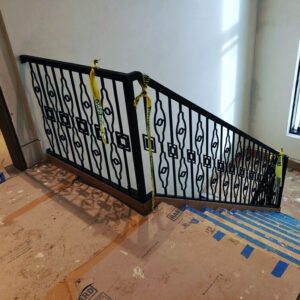
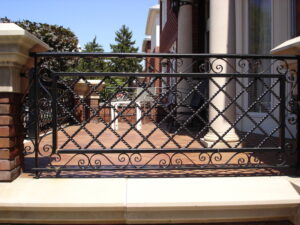
2. Wrought Iron and Steel Railings
For homeowners who want strength, character, and longevity, wrought iron and steel railings are hard to beat. These materials have been used in architectural ironwork for centuries — and for good reason.
Best for: Front entries, exterior staircases, balconies, traditional and estate-style homes
Pros:
- Exceptional durability and structural strength
- Highly customizable — scrollwork, geometric patterns, and custom designs are all achievable
- Adds significant curb appeal and perceived home value
- Long lifespan when properly finished and maintained
Cons:
- Heavier than other materials — requires proper structural support
- Can rust if the finish is compromised and left untreated
- Higher cost for custom ironwork
At PMFII, wrought iron and steel railings represent some of our most requested work — and it’s easy to see why. A well-crafted iron railing makes a statement that no other material quite replicates.
3. Aluminum Railings
Aluminum offers many of the visual qualities of steel and iron without the weight or the rust risk. It’s a popular choice for outdoor applications where low maintenance is a priority.
Best for: Decks, pool areas, coastal homes, contemporary and modern exteriors
Pros:
- Rust and corrosion resistant — ideal for humid or coastal environments
- Lightweight and easy to install
- Available in a wide range of colors and finishes
- Low maintenance compared to wood or iron
- Cost-effective for larger installations
Cons:
- Less structural strength than steel — not ideal for high-load applications
- Can feel less substantial than iron or steel
- Limited customization compared to wrought iron
For homeowners who want a clean, modern look with minimal upkeep, aluminum is a practical and attractive option.
4. Cable Railings
Cable railings have grown dramatically in popularity over the last decade, and it’s not hard to understand why. Horizontal stainless steel cables stretched between posts create an almost invisible barrier — preserving sightlines while still providing the required safety barrier.
Best for: Decks, balconies, contemporary and coastal homes, spaces with scenic views
Pros:
- Maximizes views — ideal for waterfront properties or elevated decks
- Sleek, modern aesthetic
- Stainless steel cables are highly durable and weather resistant
- Low maintenance once installed
Cons:
- Not suitable for all architectural styles — looks out of place on traditional homes
- Requires tension maintenance over time
- Post spacing requirements can limit design flexibility
- Higher installation cost than basic wood or aluminum systems
If you have a view worth preserving, a cable railing system lets you enjoy it without compromise.
5. Glass Railings
Glass railings take the open, unobstructed concept of cable railings a step further. Large panels of tempered or laminated glass replace traditional balusters entirely, creating a seamless, contemporary look.
Best for: High-end decks, interior staircases, balconies, modern and luxury homes
Pros:
- Completely unobstructed sightlines
- Sophisticated, upscale aesthetic
- Tempered glass is strong and impact-resistant
- Easy to clean
- Works beautifully both indoors and outdoors
Cons:
- Higher cost — one of the most expensive railing options
- Fingerprints and smudges show readily
- Requires professional installation
- Not ideal in areas with extreme temperature fluctuations
Glass railings are the premium choice for homeowners who want maximum visual impact and are willing to invest accordingly.
6. Composite Railings
Composite railings are made from a blend of wood fibers and plastic, offering the appearance of wood with significantly better weather resistance. They’ve become a popular choice for decks and outdoor spaces.
Best for: Decks, outdoor stairs, homeowners who want wood’s look without the maintenance
Pros:
- Resistant to rot, insects, and moisture
- Requires very little maintenance
- Available in a range of wood-like colors and textures
- Long lifespan
Cons:
- Can look less authentic than real wood up close
- Limited customization options compared to natural wood or iron
- Higher upfront cost than basic wood
- Can fade or discolor over time in direct sunlight
For a deck railing that holds up to weather without demanding annual maintenance, composite is a solid middle-ground option.
7. Stainless Steel Railings
Stainless steel railings bring an industrial-modern edge to both interior and exterior spaces. Often used in commercial settings, they’re increasingly popular in high-end residential design.
Best for: Contemporary homes, interior staircases, commercial-residential crossover spaces
Pros:
- Extremely durable and corrosion-resistant
- Sleek, modern appearance
- Easy to clean and maintain
- Works well with glass, wood, and cable infill options
Cons:
- Can feel cold or industrial in traditional home settings
- Higher cost than standard aluminum
- Scratches can be visible on polished finishes
Stainless steel works particularly well when combined with other materials — pairing it with a wood handrail, for example, softens the aesthetic while retaining the structural benefits.
Types of Railings by Location
Understanding materials is only half the picture. Where a railing will live determines as much about the right choice as anything else.
Stair Railings
Stair railings carry the most daily physical contact of any railing in a home. The handrail needs to be comfortable to grip, the balusters need to be spaced correctly to meet code (typically no more than 4 inches apart), and the whole system needs to handle regular use without wobbling or wearing.
Best material choices: Wood for interior stairs, wrought iron or steel for exterior stairs, stainless steel for modern interiors.
Deck Railings
Deck railings live outdoors full-time, exposed to sun, rain, snow, and temperature swings. Weather resistance is the primary consideration here, alongside aesthetics.
Best material choices: Aluminum, composite, cable, or properly treated wrought iron. Glass panels work beautifully on elevated decks with views.
Balcony Railings
Balcony railings combine the height exposure of deck railings with a more visible, architectural role in the home’s exterior appearance. They need to be strong, weather-resistant, and visually intentional.
Best material choices: Wrought iron or steel for traditional homes, aluminum or cable for contemporary designs, glass for luxury applications.
Interior Railings
Interior railings face less weathering but more aesthetic scrutiny. They’re often the first thing a visitor sees when entering a home, and they set the tone for the interior design.
Best material choices: Wood for classic interiors, wrought iron or steel for statement staircases, glass or stainless steel for modern and open-plan homes.
What to Consider Before You Choose
With so many options available, narrowing down the right railing type comes down to a few key questions:
What’s your architectural style? A wrought iron railing suits a traditional home beautifully but can look mismatched on a contemporary build. Match the railing to the home’s existing character.
Where will it be installed? Indoor and outdoor railings face very different conditions. Don’t choose a material based purely on aesthetics without considering the environment it will live in.
What’s your maintenance appetite? Wood demands regular attention. Aluminum and composite ask for almost none. Be honest about how much upkeep you’re willing to commit to.
What’s your budget — now and long term? A cheaper railing that needs replacing in five years isn’t necessarily the economical choice. Factor in lifespan and maintenance costs alongside the upfront price.
Do you need custom work? If you have a specific design vision — custom scrollwork, a unique configuration, or a non-standard staircase — you’ll need a fabricator who can build to your exact specifications rather than work from a catalog.
The Bottom Line
The right railing does more than meet a building code requirement. It completes a space, adds character, and contributes to the safety and value of your home in ways that are easy to overlook until you get it right.
Whether you’re drawn to the timeless warmth of wood, the strength and artistry of wrought iron, the clean lines of cable, or the openness of glass, there’s a railing type that fits your home, your style, and your budget.
At PMFII, we help homeowners across the USA navigate exactly these choices — and then build the railing that brings the vision to life. Because a railing worth having is one worth getting right.
PMFII specializes in custom railings and metalwork for homeowners across the USA. Visit pmfii.com to explore our work and start your custom railing project.